



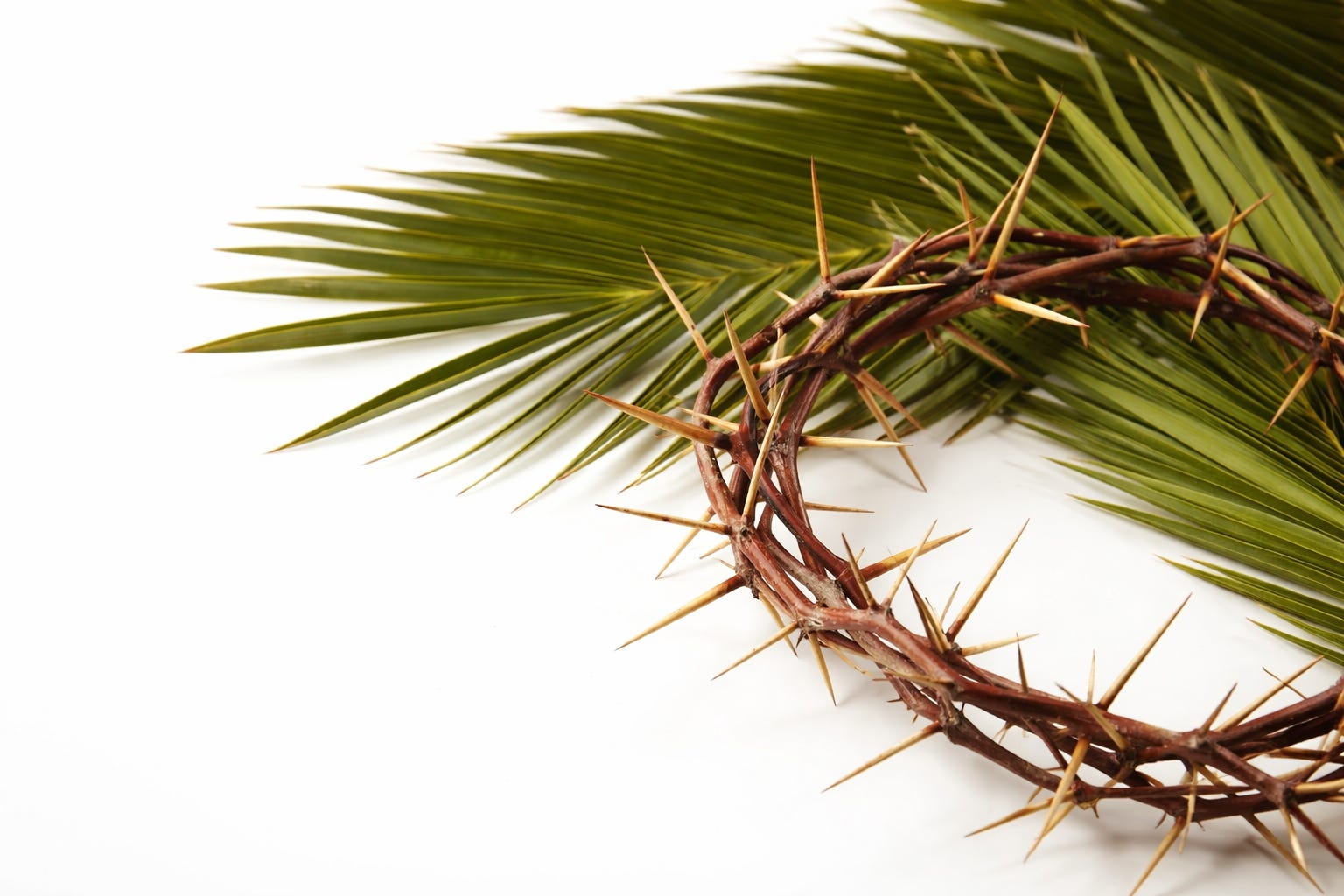
There is something unmistakably human about Palm Sunday. It is a day of movement and sound, of branches lifted high and voices raised in expectation. The story is ancient, but its pulse feels current. A man enters a city not on a war horse, but on a donkey, an act both deliberate and disarming. The crowds gather. They spread garments on the road. They wave palms, symbols of victory, and cry out, “Hosanna.” Save us.
It is, on the surface, a triumph.
But Palm Sunday is not a simple celebration. It is a mirror. It reflects not only who Christ is, but who we are.
The scene unfolds in Jerusalem under Roman occupation, a place thick with political tension, spiritual expectation, and the quiet fatigue of a people longing for change. They had seen leaders rise before. They had heard promises. What they wanted—perhaps understandably, was deliverance that looked like power: visible, immediate, decisive. A king who would overthrow systems, restore order, and place them back at the center of their own story.
Instead, they are given something else.
“A king arrives,” one might say, “but not the kind the crowd had rehearsed in their imagination. He comes without spectacle, without force, and without the language of domination. And in that, he reveals more about power than any empire ever could.”
The donkey matters. It always has. In the ancient world, kings rode horses when they came to wage war. They rode donkeys when they came in peace. This was not a small detail. It was a declaration. Christ was not entering Jerusalem to conquer Rome; He was entering it to confront something far deeper—sin, pride, the architecture of the human heart.
And yet, the crowd misunderstood.
That misunderstanding is the hinge on which the entire week turns.
Because within days, the same voices that shouted “Hosanna” would cry “Crucify Him.” The same hands that waved palms would either fall silent or join in condemnation. Palm Sunday is not simply the beginning of Holy Week. It is the unveiling of a pattern—a pattern that repeats itself across centuries, cultures, and contexts.
“We are often most enthusiastic about God,” a voice might observe, “when we believe He is about to do what we already want. The moment He moves in a way that challenges us, the enthusiasm fades.”
That pattern is not confined to history. It is visible now, woven into the fabric of modern life.
Across the world, leaders are elevated with astonishing speed, carried forward by waves of public approval. They are celebrated, amplified, and in some cases, almost sanctified by the expectations placed upon them. And just as quickly, they are dismantled. Public opinion turns. Trust erodes. The same platforms that once praised now condemn. It is not always about truth; often, it is about alignment with shifting desires.
The crowd, it seems, has not changed. Only the medium has.
Beyond politics, the world continues to strain under the weight of conflict. Wars persist. Civilians are displaced. Entire communities are reshaped by forces beyond their control. In these places, Palm Sunday feels less like a pageant and more like a question: what does it mean to welcome a king of peace in a world that still prefers the language of power?
At the same time, a quieter but no less significant tension plays out in daily life. We live in an age of performance—curated identities, measured influence, and a relentless pursuit of visibility. Success is often defined by accumulation: more wealth, more recognition, more control. It is a world that rewards the horse, not the donkey.
And yet, Palm Sunday stands as a contradiction to all of this.
“He does not enter the city to take from it,” another reflection might say, “but to give Himself to it. And in doing so, He redefines what it means to win.”
This is the backbone of the story. It is not simply about an entry into Jerusalem. It is about a collision between two visions of the world: one built on dominance and self-preservation, the other on humility and sacrifice.
Holy Week unfolds from this collision. The celebration of Sunday gives way to the confrontation of Monday, the tension of Tuesday, the quiet plotting of Wednesday, the intimacy of Thursday, the brutality of Friday, and the silence of Saturday. It is a progression that moves steadily away from spectacle and toward something far more costly.
Palm Sunday, then, is not the destination. It is the doorway.
The question is what we do as we walk through it.
For Christians, the temptation is to remain at the level of the crowd—to participate in the symbolism, to acknowledge the moment, but to stop short of its implications. It is easier to wave palms than to carry a cross. Easier to celebrate a king than to follow a servant.
But the story does not allow for that kind of distance.
“If we welcome Him only in the moments that feel triumphant,” one might say, “we have not understood Him. To know Him is to follow Him into the difficult places as well.”
What does that look like now, in a world so different from first-century Jerusalem and yet so similar in its instincts?
It begins, perhaps, with a quiet resistance to the pull of the crowd. Not a rejection of community, but a refusal to let collective emotion replace personal conviction. Faith, in this sense, is not measured by volume but by depth. It is the ability to remain anchored when everything around you shifts.
It also requires a reorientation of what we consider success. The entry into Jerusalem challenges the assumption that influence must be loud, that authority must be enforced, that value must be visible. It suggests, instead, that the most transformative acts are often the least conspicuous: a life lived with integrity, a decision made in humility, a kindness extended without recognition.
There is, too, the matter of love. Not the abstract, sentimental kind, but the kind that persists in the face of rejection. The kind that does not withdraw when it is no longer reciprocated. The kind that chooses forgiveness when resentment would be easier.
This is perhaps the most difficult aspect of the call. It is one thing to celebrate a savior; it is another to imitate Him.
“Love, in its truest form, is not a response to how we are treated,” a voice might reflect. “It is a decision about who we choose to be.”
And then there is truth. In an age saturated with information, clarity has become elusive. Narratives compete. Opinions multiply. The loudest voice often wins, not the most accurate one. Palm Sunday reminds us that the crowd can be sincerely wrong—that enthusiasm is not the same as understanding.
To follow Christ, then, is to pursue truth with patience and humility, to resist the urge to settle for what is convenient, and to remain open to being corrected.
None of this is easy. It was not easy then, and it is not easy now. But that is precisely the point.
Palm Sunday is not a comfortable story. It is a beautiful one, yes, but also unsettling. It exposes the fragility of our loyalties, the shallowness of our expectations, and the gap between what we celebrate and what we are willing to live out.
And yet, it is also an invitation.
An invitation to move beyond the surface of faith and into its substance. To step out of the crowd and into a more deliberate, more costly, more meaningful way of living. To recognize that the kind of king who rides a donkey is not asking for applause, but for allegiance.
As the week unfolds, the noise will quiet. The branches will be set aside. The focus will shift from the road into the city, from the crowd to the individual.
And there, in that quieter space, the question remains:
Will we still follow?