



After some of the world’s worst nuclear disasters, scientists turned to an unexpected ally: the sunflower.
Following catastrophes like the Chernobyl disaster and the Fukushima Daiichi nuclear disaster, researchers explored a remarkable process called phytoremediation, using plants to help remove contaminants from polluted environments. Among the plants studied, sunflowers stood out because their deep root systems could absorb certain radioactive elements and heavy metals from soil and water.
These towering flowers function almost like living filtration systems. Certain radioactive isotopes chemically resemble nutrients plants naturally seek, such as potassium and calcium. As sunflowers pull nourishment from the earth, they can also absorb harmful substances like Cesium-137 and Strontium-90 into their stems and leaves. In some areas, floating sunflower rafts were even deployed in contaminated water to help reduce pollution levels.
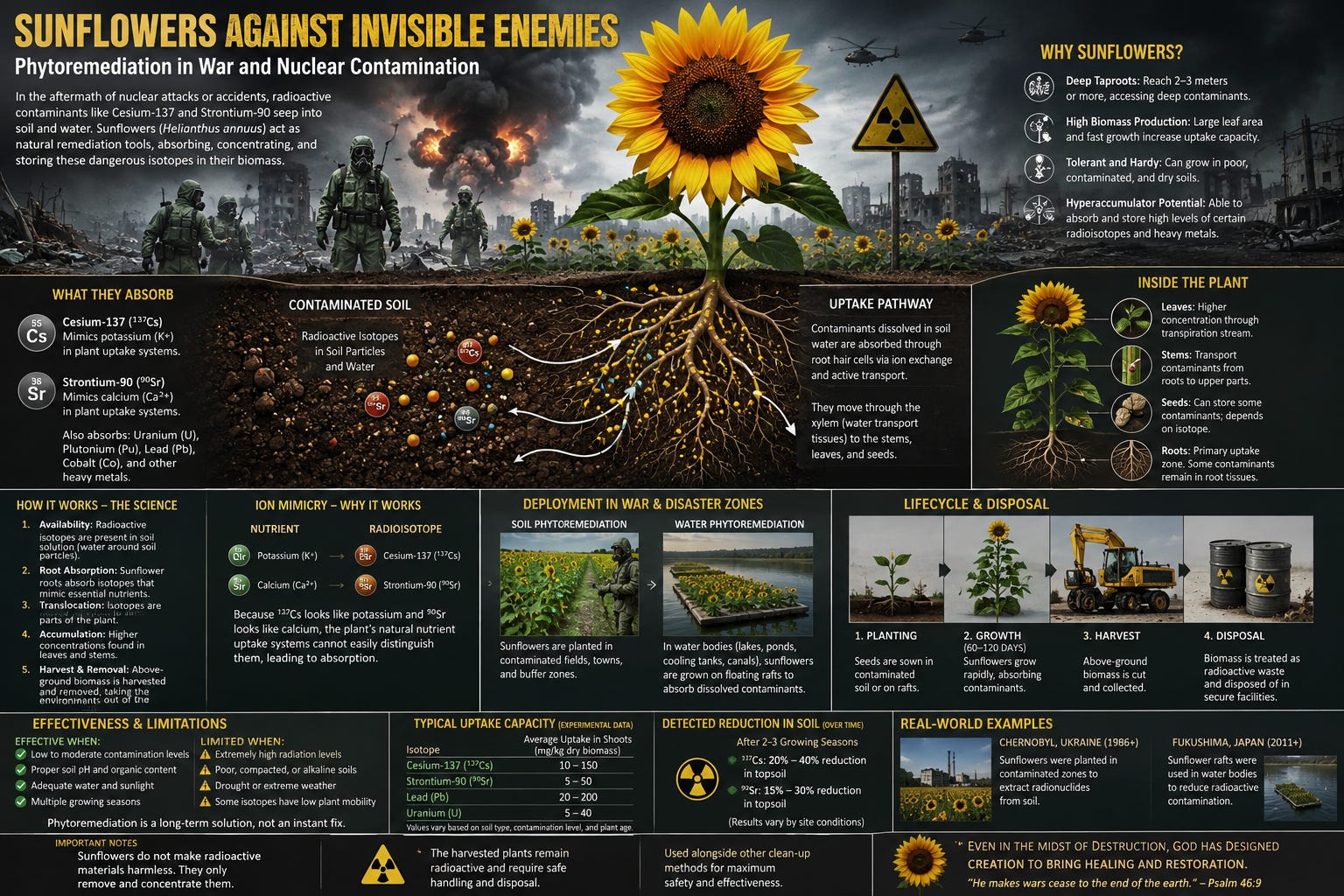
The process is far from perfect. In highly contaminated zones, plants may struggle to survive. Soil composition, moisture, and radiation intensity all affect success rates. Once mature, the contaminated sunflowers themselves must be carefully harvested and disposed of as radioactive waste. Yet even with these limitations, the image remains unforgettable: bright yellow flowers rising from poisoned ground, quietly drawing toxins out of the earth.
That picture mirrors something deeply spiritual.
Sin contaminates the human heart much like invisible radiation contaminates the soil. Its effects spread quietly, bitterness, pride, fear, anger, selfishness, often unnoticed at first, yet profoundly destructive over time. Humanity has tried countless methods to hide, manage, or deny the damage. But God’s healing work reaches deeper than surface appearances.
The Bible describes God as One who restores ruined places and brings life where death once reigned. Just as the sunflower draws harmful substances upward and away from the soil, Christ draws out the poison of sin when we surrender our lives to Him. He does not merely cover brokenness; He transforms it.
Sometimes God’s work in us is gradual. Healing can take time. Certain wounds run deep beneath the surface, hidden like contamination underground. Yet God patiently works through His Spirit, cleansing what we cannot fix ourselves.
One of the most remarkable things about a sunflower is its tendency to turn toward the sun throughout its growth. In the same way, spiritual restoration happens when we continually turn toward the light of Christ rather than the darkness around us.
The world often feels spiritually contaminated, filled with anxiety, corruption, violence, and despair. But God still plants “sunflowers” in difficult places: people who carry hope, compassion, truth, and healing into wounded environments. Through ordinary lives surrendered to Him, He begins restoring what seems beyond repair.
Bible Verses
“I will restore health unto thee, and I will heal thee of thy wounds, saith the Lord.” - Jeremiah 30:17
“Create in me a clean heart, O God; and renew a right spirit within me.” - Psalm 51:10
“The light shines in the darkness, and the darkness has not overcome it.” - John 1:5
“If anyone is in Christ, he is a new creation.” - 2 Corinthians 5:17
Take the Next Step
Think about areas of your life where hidden contamination may exist, resentment, compromise, fear, guilt, or spiritual exhaustion. Bring those places honestly before God instead of hiding them.
Like the sunflower turning toward the sun, choose today to orient your heart toward Christ:
Spend time in prayer even if healing feels slow.
Fill your mind with Scripture instead of constant negativity.
Allow God to remove harmful habits gradually but deeply.
Become a source of hope in environments filled with discouragement.
God specializes in restoration. He can bring beauty from places marked by devastation.