


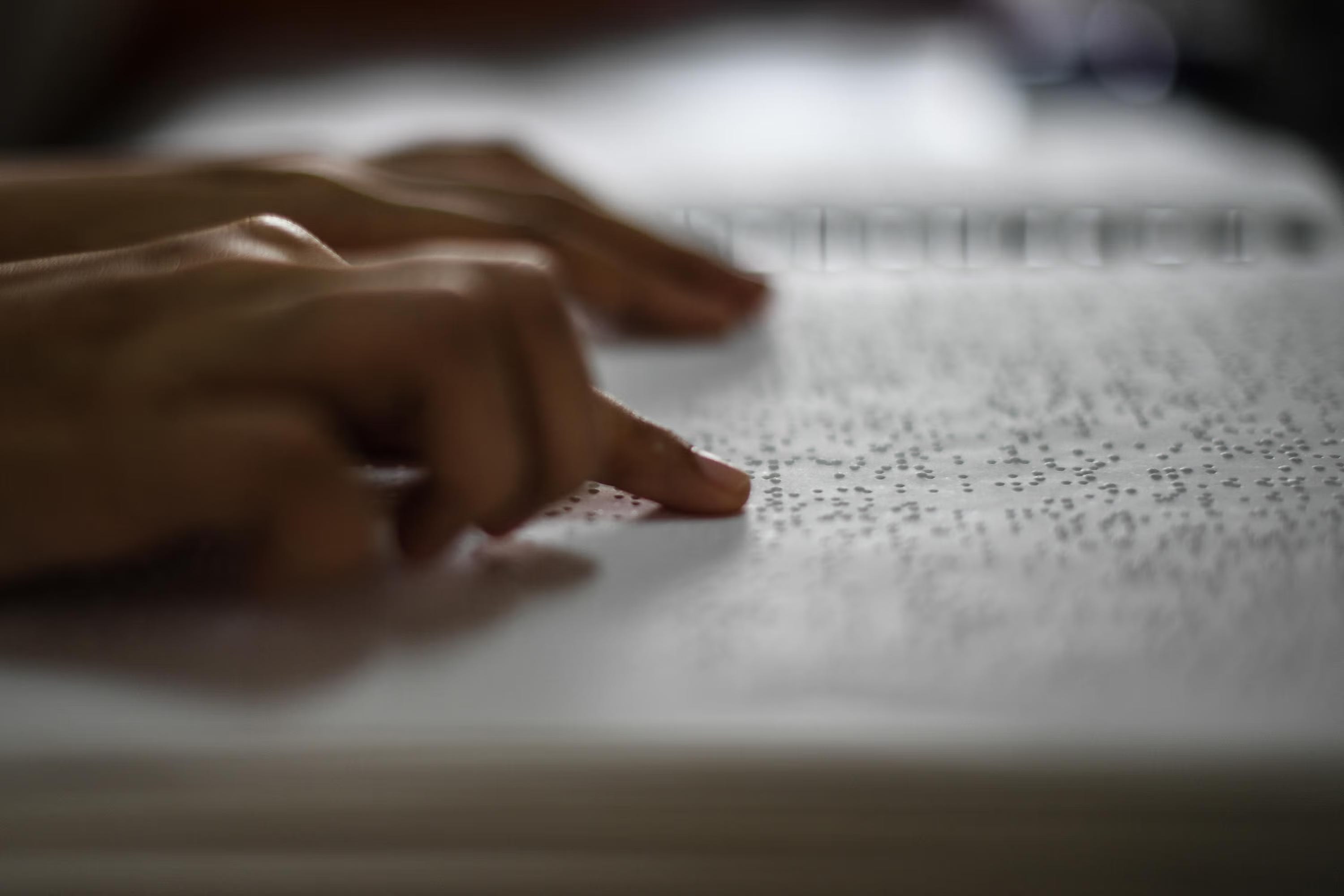
In the early 1800s, a young boy named Louis Braille lost his sight after an accident in his father’s workshop. Determined to read like others, he refined a tactile system of raised dots that could be felt with the fingertips. What began as a military code evolved into the Braille system—six tiny dots arranged in patterns that opened the world of language, education, and independence to millions of blind and visually impaired people. With practice, readers can move their fingers swiftly across a page, “seeing” words without using their eyes.
Braille reminds us that understanding is not limited to what is visible. Much of life’s deepest truth is not grasped through sight alone. Faith often grows in the unseen spaces—in trust, in quiet obedience, in moments when clarity is not immediate but still real. God’s Word works similarly. It is not always flashy or obvious, but when received with a willing heart, it becomes readable in a deeper way—etched not on paper alone, but on the soul.
Sometimes we wait for visible signs before believing or acting. Yet Scripture consistently calls us to a different posture: to trust, to listen, and to perceive beyond appearances. Like a Braille reader learning to discern meaning through touch, we are invited to develop spiritual sensitivity—learning to recognize God’s guidance even when it is subtle.
“Now faith is the substance of things hoped for, the evidence of things not seen.” — Hebrews 11:1
“Blessed are those who have not seen and yet have believed.” — John 20:29
Take the Next Step
Consider where you may be relying only on what you can immediately see or prove. Is there an area where you sense God leading, even if the path isn’t fully visible? Spend time in quiet reflection today, asking for discernment that goes deeper than appearances. Trust that understanding can come in ways you don’t expect.