



In times of sudden crisis, one of the least visible tragedies is what experts sometimes call “secondary abandonment patterns”, when dependents (especially animals) are left behind not out of cruelty, but chaos. Studies in emergency displacement show that when humans face immediate survival decisions, anything that cannot be quickly transported often becomes unintentionally forsaken. Pets, entirely dependent and unable to interpret events, experience what behavioral scientists describe as “disruption trauma”, they wait, often faithfully, for people who will never return.
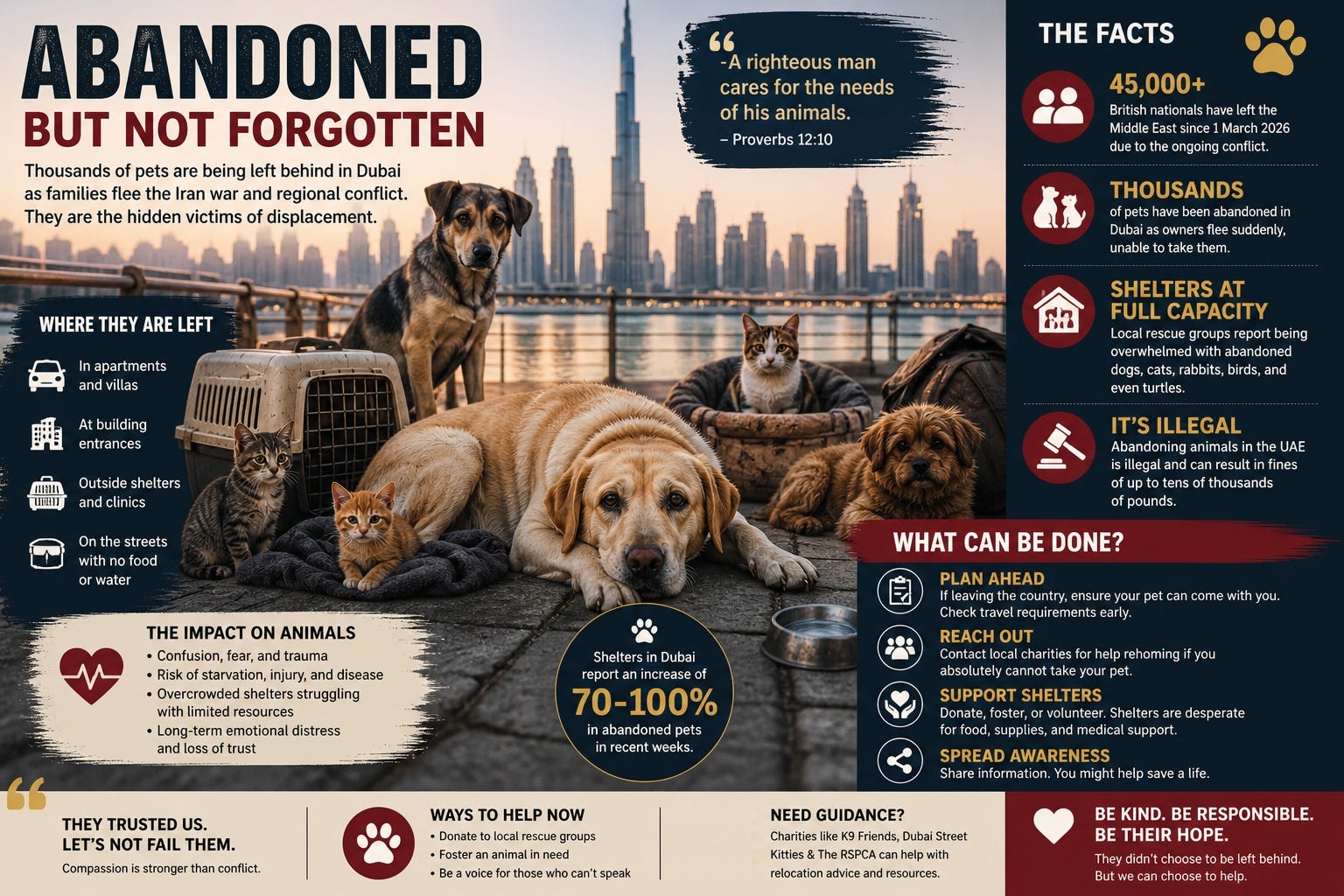
This reality opens a sobering spiritual window.
Scripture repeatedly contrasts human inconsistency with God’s unwavering faithfulness. In moments of fear, people can make decisions they never imagined, leaving behind responsibilities, relationships, even love. Yet God presents Himself as the exact opposite: One who never abandons, never forgets, never disappears in crisis.
The image of a waiting animal, confused but loyal, echoes a deeper truth about the human soul. We, too, are dependent beings. And in life’s upheavals, we often wonder: Have we been forgotten? Has God left us behind in the chaos?
The answer from Scripture is clear and steady.
“A woman may forget her nursing child… yet I will not forget you.” - Isaiah 49:15
“I will never leave you nor forsake you.” - Hebrews 13:5
Even when human systems fail, when people scatter, when fear overrides intention—God does not operate on panic. He is not overwhelmed, not under-resourced, not forced into impossible choices. He does not triage love.
Where people may fail under pressure, God remains constant in compassion.
And there’s another layer: this moment also calls believers to reflect God’s character. The Bible consistently portrays righteousness not only in grand acts, but in how we care for the vulnerable who depend on us.
“The righteous care for the needs of their animals.” - Proverbs 12:10
Faith is not abstract, it shows up in responsibility, even under pressure.
Take the Next Step
Consider what (or who) depends on you, spiritually, emotionally, or physically. Ask yourself: Am I reflecting God’s faithfulness, even when life feels unstable? If you feel abandoned or uncertain, hold onto this truth: God has not lost track of you. Let this moment deepen both your trust in God, and your compassion toward others who depend on care.