


There are moments in history when the world seems to shake—not just politically or economically, but spiritually.
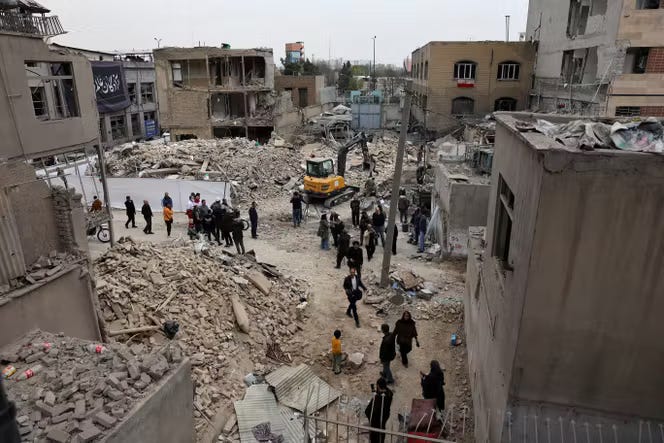
The current war involving Iran is one of those moments.
It has stirred something deeper than headlines. It has triggered questions that go beyond strategy and geopolitics and into the territory of faith:
Is this from God?
Is this prophecy unfolding?
Are we witnessing the beginning of the end?
These are not foolish questions. They are human ones. Especially in a place like Jamaica, where faith is not just practised—it is lived.
But if we are going to ask spiritual questions, we must also be prepared to pursue spiritual truth with discipline, humility, and clarity.
Because not everything that feels spiritual… is divine in origin.
A Time to Reflect, Not React
War has a way of accelerating emotion. It pulls people toward urgency—toward conclusions that feel right in the moment, even if they are not well examined.
And in that emotional space, it becomes easy to assign meaning too quickly.
But faith, when it is mature, does not rush.
It pauses. It examines. It listens.
Dean Jones puts it in a way that feels both grounded and wise:
“Faith should steady you, not speed you up. The moment you feel rushed to conclude something spiritual, that’s usually the moment to slow down.”
That is the posture required here.
Not fear. Not excitement. But discernment.
God and War — What Scripture Actually Shows
The Bible does not ignore war. In fact, it is filled with it.
From the Old Testament to the New, conflict appears again and again. Nations rise. Nations fall. Empires clash. People suffer.
But one thing becomes clear when you read Scripture carefully:
Not every war is God’s will.
And not every conflict is a divine signal.
Sometimes, war is simply the result of human choices—pride, power, fear, ambition.
James 4:1 says it plainly:
“What causes fights and quarrels among you? Don’t they come from your desires that battle within you?”
That is not prophecy. That is diagnosis.
It reminds us that conflict often begins not in heaven—but in the human heart.
The Danger of Forcing Prophecy Onto the Present
It is tempting—very tempting—to take modern events and fit them into biblical prophecy.
Iran becomes Persia.
Israel is already central.
Global tension increases.
And suddenly, everything starts to look like a puzzle coming together.
But there is a danger here.
Because when we force Scripture to match current events, we risk misunderstanding both.
Dean Jones captures this with quiet precision:
“When people try to make the Bible explain everything happening now, they often end up misunderstanding both the Bible and the moment.”
That doesn’t mean prophecy isn’t real.
It means interpretation requires care.
The Bible speaks in layers—symbolic, historical, spiritual. It was not written as a modern news forecast. And when we treat it that way, we reduce its depth.
So Where Is God in All of This?
This is perhaps the most important question.
If the war is not a clear fulfilment of prophecy, then where is God in it?
The answer is both simple and profound:
God is present—but not necessarily as the cause.
Scripture shows us that God is:
Near to the brokenhearted
A refuge in times of trouble
A source of wisdom for those who seek it
God is not absent in war. But neither is He automatically the author of it.
This distinction matters.
Because it shifts the question from:

“Did God cause this?”
to

“How should we respond to this, in light of who God is?”
Jamaica, Faith, and the Weight of Interpretation
In Jamaica, faith is not passive. It is expressive. It is vocal. It is deeply woven into everyday life.
So when global events carry even a hint of biblical connection, they resonate strongly.
People talk about:
Signs
Judgement
End times
And again—this is not wrong in itself. It reflects a people who take God seriously.
But seriousness must be matched with soundness.
Because fear-driven interpretation can lead to confusion, anxiety, and even misinformation.
Dean Jones addresses this with clarity:
“Belief should bring understanding, not panic. The moment it creates confusion, we have to question how we’re applying it.”
That is a necessary checkpoint.
Faith should clarify reality, not distort it.
What This War Really Teaches Us
If we step back—carefully, thoughtfully—there are lessons here. Not just political ones, but spiritual ones too.
1. The World Is Fragile
War reminds us how quickly stability can shift.
One decision. One escalation. One moment—and everything changes.
That reality should not lead to fear, but to awareness.
2. Human Power Is Limited
No matter how advanced nations become, conflict continues.
Technology improves. Systems evolve. But human nature remains complex.
And that is something Scripture has always pointed to.
3. Discernment Is Essential
We live in an age of information—but not always of understanding.
Voices are loud. Opinions are constant. Narratives spread quickly.
But not all of them are grounded in truth.
Which is why discernment is not optional—it is necessary.
A Faith That Thinks, Not Just Feels
There is a quiet strength in balanced faith.
Not a faith that ignores reality.
Not a faith that overreacts to it.
But a faith that engages with the world honestly and intelligently.
Dean Jones expresses it in a way that feels both simple and profound:
“God gave us faith, but He also gave us the ability to think. The two were never meant to compete.”
That balance is what is needed now.
Because without it, we risk becoming either:
Overly sceptical, dismissing everything spiritual
Or overly reactive, spiritualising everything we see
Neither is helpful.
How Should We Respond?
So what does a grounded, God-centred response look like?
Not panic.
Not speculation.
Not constant prediction.
But something far more stable.
1. Stay Informed
Understand what is actually happening—not just what is being said.
2. Stay Grounded
Recognise the difference between faith and fear.
3. Stay Prayerful
Not in a reactive way—but in a steady, intentional way.
4. Stay Wise
Ask questions. Think clearly. Avoid extremes.
A Quiet Truth We Must Hold On To
There is something deeply reassuring in this:
God does not need chaos to accomplish His purpose.
And not every moment of chaos is a sign that something divine is unfolding in a dramatic way.
Sometimes, it is simply the result of a world that is still learning, still struggling, still imperfect.
And in that world, faith is not about predicting every event.
It is about living rightly within them.
Conclusion — Between Signs and Sense
The war in Iran may feel like a sign.
And perhaps, in a broad sense, it is a reminder—a reminder of the world we live in, the tensions that exist, and the need for wisdom.
But we must be careful not to turn every conflict into a conclusion.
Because faith is not strengthened by jumping to answers.
It is strengthened by seeking truth—patiently, thoughtfully, and with humility.
And as Dean Jones leaves us with one final reflection:
“The strongest faith isn’t the one that explains everything. It’s the one that remains steady while everything is being explained.”