


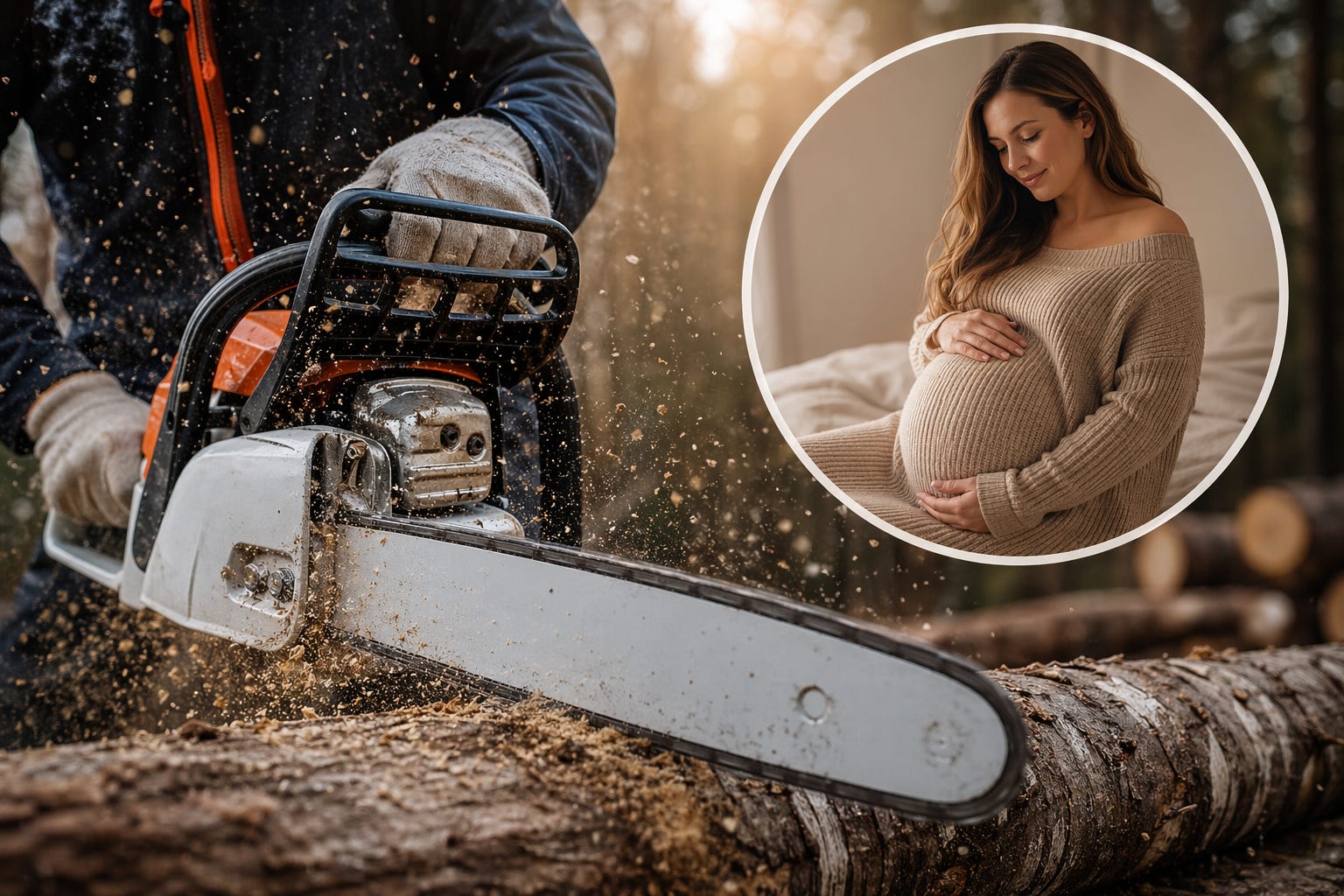
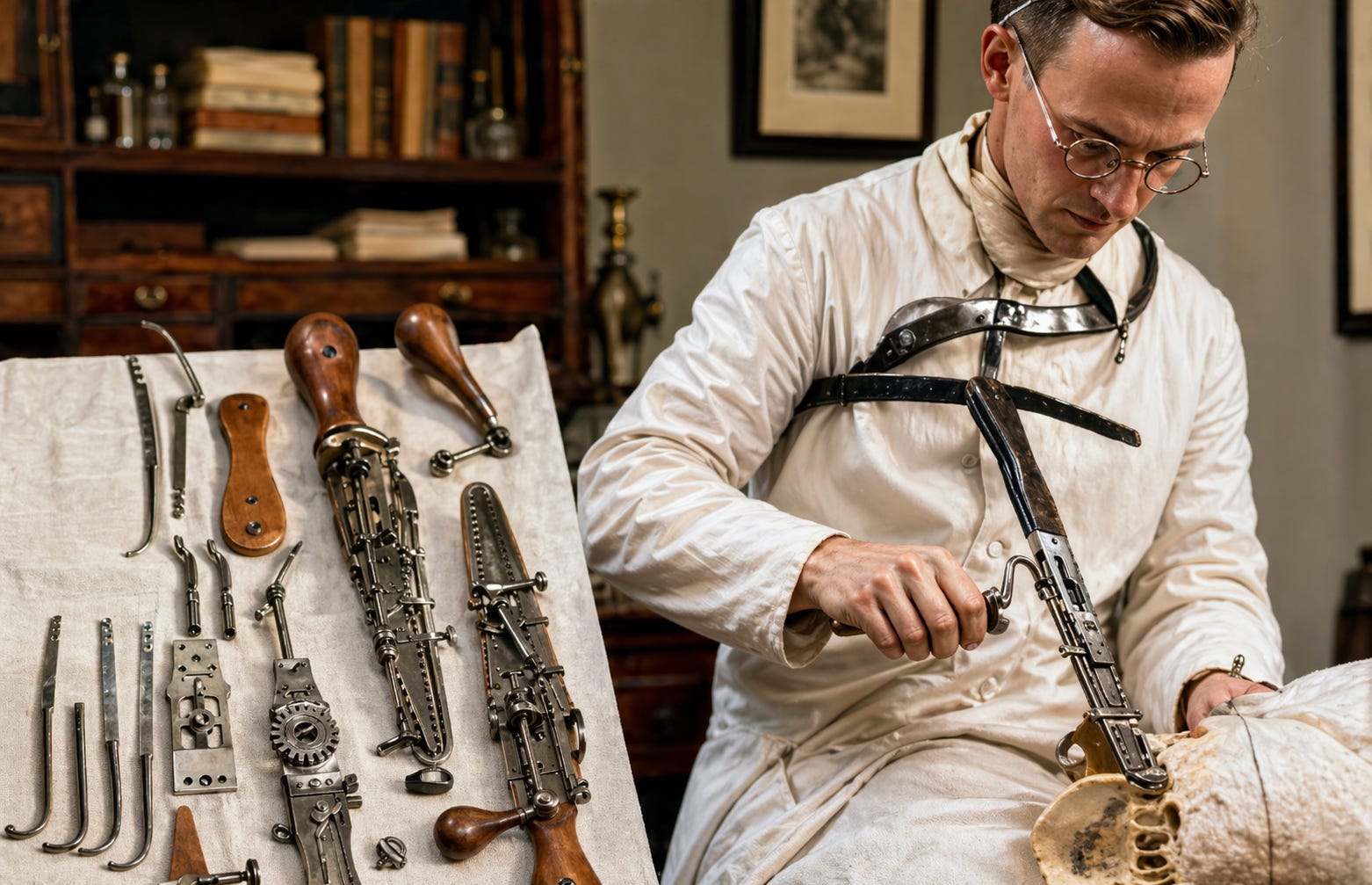
In the cold rooms of late 18th-century Scotland, before anesthetic softened the edge of pain, there was a sound no one forgets. Not the cry. Not the prayer. The turning. A small, hand-cranked chain. Metal teeth catching bone. A tool designed not for forests, but for flesh.
Doctors like John Aitken and James Jeffray developed what would become the earliest form of the chainsaw, not to build, but to cut through suffering. The procedure was called symphysiotomy, a desperate attempt to widen the pelvis during childbirth when both mother and child stood at the edge of death. No electricity. No sterile theatre as we know it. No soft assurances. Just urgency. Just risk. Just hope wrapped in iron.
It is uncomfortable to sit with this. It should be. Because there is something in us that recoils. It feels wrong. It feels brutal. It feels almost unthinkable that such a tool could ever have been used in such a moment. And yet, this is history, shaped by people working with limited knowledge, limited tools, and urgent need. They were not acting out of cruelty, but out of a desire to save life with what was available. Still, it remains difficult to process. There is no soft way to say it. It forces a confrontation with a truth often avoided: that sometimes, what is meant to save does not look like salvation at all. Because we prefer our healing clean. We want restoration without incision. We want God to fix things without touching the place that hurts. But history refuses to lie to us. The first version of what we now casually associate with cutting wood was born in a moment where pain and mercy held hands.
There is something deeply unsettling here, and deeply familiar. Because if you are honest, you have heard that sound before. Not metal on bone, but pressure on the soul. Moments where life did not gently guide you, it cut you open. Moments that did not feel like love, but later refused to leave you unchanged. And we ask, quietly or loudly: How can something so painful possibly be part of anything good?
The truth is not soft. God does not waste pain. But He also does not always prevent the blade. That is the part few people preach. We celebrate the promise: “All things work together for good…” (Romans 8:28). But we skip the process that makes it true. Sometimes, things must be cut before they can be carried. Sometimes, something must be opened before it can be healed.
Even in Scripture, healing is not always gentle. The cross was not gentle. It was wood, nails, and breath leaving a body in slow motion. And yet, it became the greatest act of restoration the world has ever known.
Here is the quiet shift. The same concept, the same motion, the same force… moved from a surgical room to forests and fields, to building homes, shaping land, creating shelter. What once cut bone now cuts timber. What once felt like destruction now makes way for construction.
And somewhere in that transition is your story. You are not standing in the surgery anymore, even if it still feels like it. Time has moved. God has moved, even when you didn’t feel it. That moment that broke you, that betrayal, that delay, that season that made no sense, it may not have been the end. It may have been the tool being formed.
Here is where it softens. Because God is not standing over you with a blade. He is the one who stayed in the room, the one who did not walk away when it was messy, the one who sees not just what was cut, but what can still be built.
“He heals the brokenhearted and binds up their wounds.” — Psalm 147:3.
Not ignores them. Not rushes past them. Binds them. Carefully. Deliberately. Like someone who understands both pain and purpose.
And just for a moment, allow yourself to smile at this strange truth: a tool once used in one of the most intense moments of human pain is now used to build homes, carve beauty, and shape the world. If that can be repurposed, so can you.
So today, do not ask only, “Why did this happen?” Ask something more dangerous. More hopeful. What is this becoming? Because God has never been limited to the original purpose of a thing, not a tool, not a moment, not even your worst day.
Today, walk with this:
You may have felt the cut, but you are not the wound. You are what God is building after it.